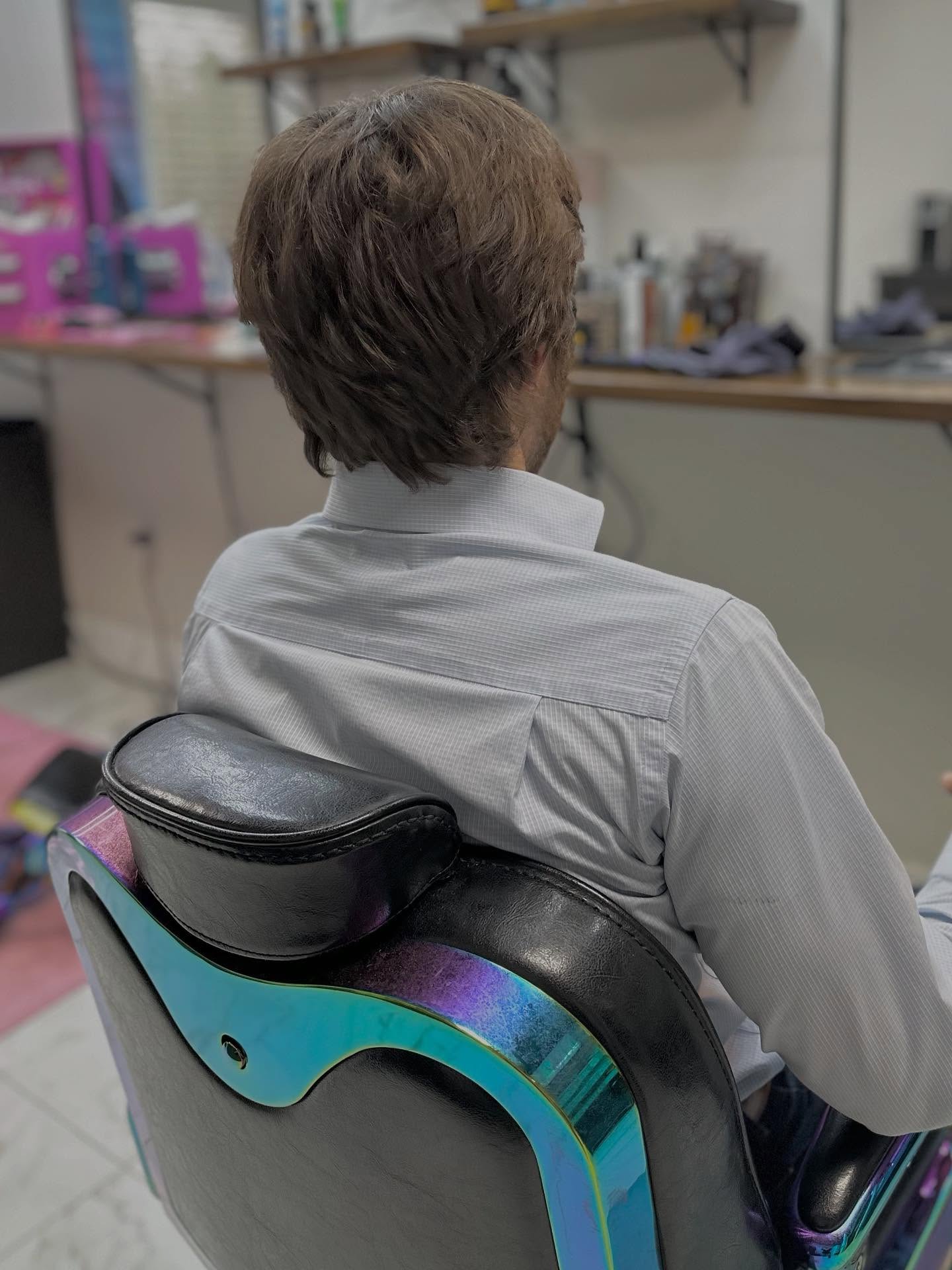
Fade vs. taper. Most guys use the words like they mean the same thing, and most barbers hear the confusion every day. They're different cuts, and asking for the wrong one is how you end up with sides shorter than you wanted.
Here is the difference between a fade and a taper, and how to decide which one fits you.
The short answer
A taper gets shorter toward the ears and neckline but never reaches skin. A fade keeps going until it does. That one detail changes how the cut looks, how it grows out, and how often you need to be back in the chair.
What is a taper?
A taper is a gradual shortening of the hair on the sides and back. The length steps down, but there is always hair left, even at the shortest point. The result is a clean, soft transition.
Tapers grow out well. With no bare skin to give away the regrowth, a taper still looks tidy at four to six weeks. That makes it the right call for office jobs, first visits with a new barber, and anyone who doesn't want to think about their haircut every other week.
What is a fade?
A fade runs the same gradual blend all the way down to skin. Somewhere on the sides or back, the hair goes to zero. The contrast between skin and hair is what makes a fade look sharp.
Where the skin starts sets the type of fade:
- Low fade: starts just above the ear. Subtle, with the most hair left on the sides.
- Mid fade: starts around the middle of the sides. The balanced option and the one most guys land on.
- High fade: starts near the temple. The boldest look, with the most skin showing.
The tradeoff is upkeep. A fade loses its edge fast, so plan on a visit every two to three weeks to keep it crisp.
What is a taper fade?
A taper fade combines the two. The sides taper down gradually, then blend to skin only near the hairline and neckline. You get the natural look of a taper with a clean, sharp finish where it counts.
If you want a fade but can't commit to the rebooking schedule, a taper fade is usually the answer.
Low taper vs. low fade, and other close calls
These are the comparisons we get asked about most:
- Low taper vs. low fade: both start low and stay subtle. The low taper never touches skin. The low fade does. Pick the taper if you want zero maintenance pressure, the fade if you want the crisp edge.
- High taper vs. low taper: the high taper starts the shortening higher up the head, so you see more contrast. The low taper keeps it near the ear and neckline.
- Skin fade vs. taper fade: a skin fade goes fully to bare skin across a wide area. A taper fade only reaches skin at the very bottom.
Which should you ask for?
| If you want | Ask for |
|---|---|
| Classic, conservative, easy to maintain | A taper |
| Sharp, modern, high contrast | A fade (say low, mid, or high) |
| The best of both | A taper fade |
| Not sure | Tell your barber your hair type, how often you can come in, and where you need to look put together |
Hair type matters too. Straight, wavy, and curly hair all take a taper or a fade well, but they look different once cut, so show your barber a photo of what you have in mind. A photo beats any description.
Get it done right in Greenville, SC
At One Seven Barber Co., our two master barbers have more than 23 years of combined experience, and tapers, fades, and taper fades are everyday work for us. If you're looking for a fade haircut near you in Greenville, tell us which one you want and where you want the line to sit. If you're not sure, we'll walk you through it before the clippers come out.
See our men's haircut in Greenville, SC for pricing and what's included, or book your appointment. Walk-ins are welcome, appointments preferred.